Sharm El Sheikh vs. Antalya: Why I Finally Stopped Booking Turkey and Fell for the Red Sea Instead
20/08/2026
A honest, first-hand comparison of Egypt's Red Sea capital and Turkey's Turquoise Coast — with real numbers, real weather data, and the story of the holiday that changed my mind.
I need to tell you about the November I almost didn't book Sharm El Sheikh.
For six years running, my family had done the same thing every autumn: open a browser, type "all-inclusive winter sun holiday," and land on Antalya. It was comfortable. It was familiar. It was, if I'm honest, a little boring — the same beach chairs, the same buffet, the same grey drizzle sneaking in by late October. In 2019 a friend who dives for a living looked at me like I'd said something slightly insane when I mentioned we were "doing Turkey again," and said: "You've never been to the Red Sea? You're doing winter sun wrong."
So we changed the booking. Six days before departure, we swapped Antalya for Sharm El Sheikh. What follows isn't a brochure. It's what actually happened — backed up, wherever I can manage it, with real climate data, real marine science, and real tourism statistics, not the kind of copy-paste "top 10" nonsense that every travel agency site publishes. If you're stuck between Sharm El Sheikh vs Antalya for your next all-inclusive winter sun holiday, sit down, because this is going to save you a genuinely bad booking decision.
The Moment That Sold Me: Stepping Off the Plane in January
Here's what nobody tells you about Antalya in winter: it is not, in any meaningful sense, a winter sun destination. It's a summer destination that you're renting out of season, at a discount, because the sun has gone somewhere else.
According to long-run climate records for Antalya, January daytime highs average around 14°C, with lows dropping to roughly 8°C, and the month brings close to 235mm of rainfall spread across 10 rain days — nearly a third of the month lost to grey skies and wet pavement. Sunshine hours in January hover around 180 hours for the whole month. February isn't much kinder: highs near 15°C, another 120mm-plus of rain, and barely 190 hours of sun.
Now compare that to Sharm El Sheikh. Official climate averages put January's daily maximum at roughly 19°C, climbing into the low-to-mid 20s by March, with essentially zero meaningful rainfall — most months log 0 to 3mm total, spread across effectively zero "rain days." Sunshine hours in Sharm regularly run at 330 to 370+ hours per month, even in the depths of winter. That's not a typo: Sharm's worst winter month for sunshine still beats Antalya's best summer month for sunshine hours, and it does it with barely a drop of rain.
I stood on Naama Bay promenade on the 3rd of January in a T-shirt, watching the sun set orange over the Sinai mountains across the Gulf of Aqaba, and I thought about my last three Antalya Januaries spent under an umbrella by a heated pool because the sea was unswimmable and the sky was the colour of wet concrete. That's the first reason this comparison isn't close for anyone chasing genuine, reliable winter sun holidays: Sharm El Sheikh has weather. Antalya, for half the year, has weather you have to apologise for.
The Water Is the Whole Point — And This Is Where Turkey Simply Can't Compete
Let's talk about what's actually under the surface, because this is where the story stops being about temperature charts and starts being about something I genuinely didn't expect: biodiversity.
The Mediterranean around Antalya is a lovely, tired, overfished sea. It's beautiful in a familiar, gentle way — turquoise shallows, pebble coves, warm currents in July. But it is, ecologically, a relatively species-poor basin compared to what sits on the other side of the Sinai Peninsula.
The Red Sea is a different universe. A peer-reviewed ichthyofauna survey published by Springer catalogued 1,264 fish species across 155 families living in the Red Sea, with roughly 13 to 14 percent of them found nowhere else on Earth — true endemics, unique to this one narrow sea. Separately, field studies of the reef systems around the Sinai coast — the same reefs you swim over from the beach in Sharm — have documented well over 200 hard coral species, alongside dense populations of reef sharks, eagle rays, hawksbill turtles, and the kind of coral wall diving that barely exists in the eastern Mediterranean at all.
Ras Mohammed National Park, at the very southern tip of the Sinai and a short boat ride from Sharm's marinas, is widely regarded by diving scientists and marine biologists as one of the finest reef systems on the planet — not "one of the best in Egypt," one of the best on the planet, full stop. You do not need a PADI card to understand why: put a mask on at the house reef of almost any Sharm hotel and you'll see more colour, more movement, and more genuine wild marine life in twenty minutes than an entire week of Antalya beach swimming will show you.
This is why, if you search anything like "best snorkelling destination in the world," "Red Sea diving holidays," "best coral reef for beginners," or "Ras Mohammed National Park tours," you will keep landing back on Sharm El Sheikh, not Antalya. It isn't marketing. It's geology and biology. Turkey's coastline is gorgeous for a swim. Egypt's Red Sea coast is a living coral cathedral you can access by wading in from a sun lounger.
The Numbers Behind the Boom: Why Everyone Is Suddenly Talking About Egypt
I'm not the only one who switched. Egypt's tourism sector has been on an extraordinary run, and the figures are public record, not agency spin.
According to reporting that cites Egypt's own tourism authority data, the country welcomed roughly 19 million international visitors in 2025, a jump of about 21 percent year-on-year — one of the sharpest tourism growth rates recorded anywhere in the world that year. Egypt's central bank figures show tourism revenue climbing to roughly $16.7 billion in 2025, up from $14.4 billion the year before, and the government's own economic projections (built on Fitch Ratings analysis) put Egypt on track for 18.6 million arrivals in 2026, with continued growth averaging nearly 6 percent annually through 2029.
For context on scale: Egyptian officials have previously noted that around 75 percent of the country's total tourist arrivals head straight for the Red Sea resort towns — Sharm El Sheikh, Hurghada, and Marsa Alam — rather than Cairo. In other words, when people say "I'm going to Egypt" for a beach holiday, in three out of four cases they mean the Red Sea coast, and Sharm sits right at the top of that list for European travellers specifically because of its direct flight network and its reef access.
That's not a coincidence. It's what happens when a destination genuinely out-competes the alternative on climate, marine life, and — as we're about to get into — value for money.
Show Me the Money: A Real Cost Comparison
Here's the part that matters most if you're the one entering your card details.
Package holiday pricing shifts constantly, so treat exact figures as a snapshot rather than gospel — but the pattern has held for years across every major booking platform and every currency conversion I've tracked: a comparable four- or five-star all-inclusive week in Sharm El Sheikh typically undercuts an equivalent Antalya package once you strip out the short-haul "cheap flight" illusion, because:
- The season is roughly twice as long. Antalya's genuinely warm, reliably dry all-inclusive season runs from roughly late May to mid-September — call it four months of dependable beach weather. Sharm El Sheikh is swimmable and sunny essentially year-round, including the exact months (November through March) when European travellers are most desperate to escape the cold and most willing to pay for it. That means Sharm can offer competitive "cheap all-inclusive winter holidays" pricing in January that Antalya simply cannot match, because Antalya in January is an off-season product being sold at an off-season discount for an off-season experience.
- Room-for-room, five-star Red Sea resorts routinely include more. Private beach access, dive centres, house reefs, multiple à la carte restaurants and desert excursions are baked into the standard package in a way that's often an upsell in Turkey's more saturated, commoditised resort belt.
- Currency dynamics have worked in travellers' favour. With the Egyptian pound's valuation relative to the euro, pound sterling, and dollar, on-the-ground extras — spa treatments, excursions, drinks, souvenirs, taxis — have consistently priced lower in Egypt than in Turkey's more tourist-adjusted lira economy.
If you're the kind of traveller searching "best value all-inclusive resorts 2026," "luxury Red Sea resort deals," "affordable 5-star winter sun," or "cheap flights to Sharm El Sheikh," this is exactly the calculation worth running before you hit "book": more sunshine days per euro spent, better marine life per dollar, and a genuinely longer usable season.
Antalya, In Fairness: What It Still Does Well
I'm not here to pretend Antalya is a bad destination — it isn't, and a fair comparison has to say so.
Antalya wins on short-haul convenience for much of central and western Europe, with flight times from cities like London, Berlin, or Warsaw often shaving an hour or more off the equivalent Sharm route. It has a genuinely spectacular hinterland — the Taurus Mountains, the ruins of Perge and Aspendos, waterfalls, canyons, and a food culture that's varied and excellent well beyond hotel buffets. Turkish hospitality is warm, the shopping (from the Grand Bazaar-style markets to modern malls) is strong, and for travellers who want a beach holiday layered with genuine Greco-Roman archaeology on the doorstep, Antalya's back-country is hard to beat. If your priority is culture-hopping and shoulder-season hiking with a beach bolt-on, June through September in Antalya is genuinely lovely.
But — and this is the entire point of this article — if what you actually want is reliable winter warmth, world-class marine life, and maximum value for a genuine sun holiday, the honest comparison tilts hard toward Egypt's Red Sea coast, and Sharm El Sheikh specifically.
What a Week in Sharm Actually Feels Like
Let me go back to the story, because numbers only tell half of it.
On day two, we took a boat out past Tiran Island toward the edge of Ras Mohammed. The water changed colour three times before we even reached the reef wall — pale turquoise over sand, then a deep glassy blue, then that famous coral-reef teal you've seen in a hundred screensavers and never quite believed was real until you're floating over it. Our guide, an Egyptian dive instructor who'd been working the same reef system for eleven years, pointed out a hawksbill turtle drifting past like it owned the place, entirely unbothered by a boatload of tourists in badly-fitted snorkels.
That evening, we ate grilled sea bream at a family-run restaurant tucked just off the main Naama Bay strip — not a hotel buffet, an actual local place, plastic chairs and all — while the muezzin's call drifted faintly across the bay and the temperature sat somewhere around a perfect 24°C at 9pm. My kids, who normally complain about everything, were silent, which if you have kids you'll know is the single highest compliment a holiday can receive.
By day four we'd done a desert quad-bike excursion into the Sinai's lunar-orange dunes, watched the sun set from a Bedouin camp over sweet mint tea, and still had three more days of reef ahead of us. That's the Sharm rhythm: beach and reef in the morning, culture and desert in the afternoon, warm evenings you don't need a jacket for, and a sea that's genuinely, consistently, swimmably warm — Red Sea water temperatures rarely drop below the low-to-mid 20s°C even in the coldest winter months, which is simply not something the Mediterranean around Antalya can offer from November to April.
We came home tanned in January. My friend who dives for a living was right. I'd been doing winter sun wrong for six years.
Sharm El Sheikh vs. Antalya: The Side-by-Side Breakdown
| Factor |
Sharm El Sheikh, Egypt |
Antalya, Turkey |
| January average high |
~19°C |
~14°C |
| January rainfall |
Near zero (0–4mm) |
~235mm across 10 rain days |
| Winter sunshine hours/month |
330–370+ |
~180–195 |
| Usable warm-water season |
Essentially year-round |
~4–5 months (late May–Sept) |
| Documented fish species in the sea |
1,264 species, 155 families |
Far fewer; Mediterranean basin |
| Endemic marine species |
~13–14% found nowhere else |
Minimal endemism |
| Reef access |
Direct house-reef snorkelling from most hotels |
Not a coral coastline |
| Best known marine park |
Ras Mohammed National Park |
N/A |
| Typical strength |
Winter sun, diving, reef, desert excursions |
Short flight time, ruins, mountains, summer beach |
The Neighbourhoods: Where to Actually Stay in Sharm El Sheikh
One thing nobody explained to me before that first trip was that "Sharm El Sheikh" isn't one strip of beach — it's a collection of distinct bays, each with its own personality, and picking the right one matters as much as picking the right hotel.
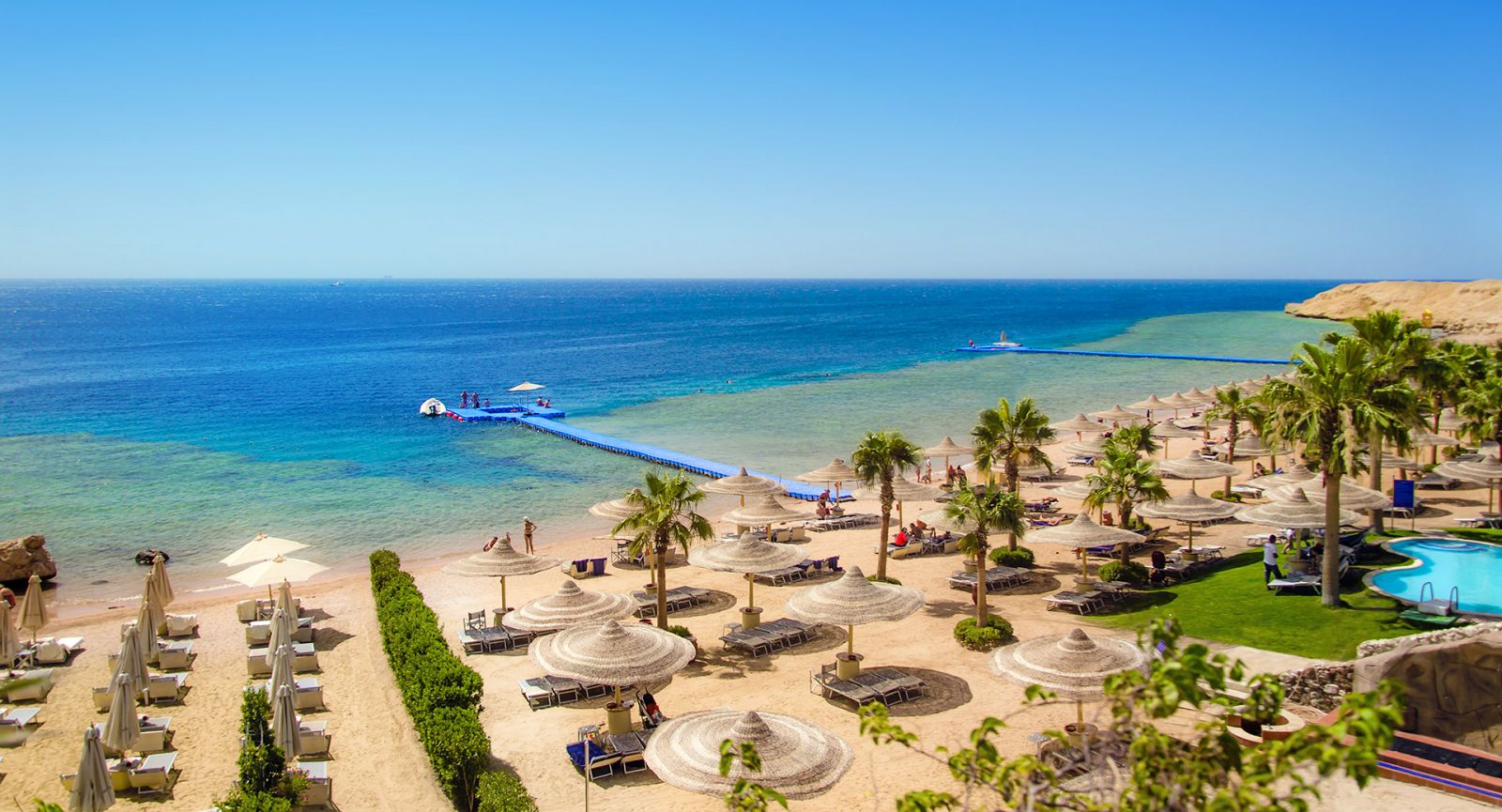
Naama Bay is the beating heart of the resort, the closest thing Sharm has to a boardwalk. This is where you'll find the densest cluster of restaurants, dive shops, and evening promenade life — good for first-timers who want everything within walking distance, and genuinely lively without tipping into the kind of chaotic strip you sometimes get in over-saturated Mediterranean resort towns.
Sharks Bay and Ras Nasrani, a little further north, are quieter, calmer, and built around some of the best house reefs in the entire resort — this is where serious snorkellers and easy-access divers tend to book, because you can walk out of your room and be fin-kicking over coral within five minutes.
Nabq Bay, further north still, has become the go-to for families in the last decade — wide, shallow, gently sloping beaches that are genuinely safer for small children than the deeper drop-offs elsewhere, plus a newer generation of large all-inclusive family resorts with multiple pools and kids' clubs.
Old Market (Sharm El Maya), the original town centre, is where you go for the version of Egypt that isn't built for tourists at all — spice stalls, tea houses, and the kind of unfiltered local colour that makes a resort holiday feel like it's actually in a real country, rather than a resort bubble airlifted onto a beach.
Compare that to Antalya, where the resort belt — Lara, Konyaaltı, Belek, Side — is functionally more homogeneous: good beaches, competent hotels, but a narrower range of genuinely distinct experiences packed into the same coastal stretch.
Diving and Snorkelling, in Real Detail
If you've read this far and you're even slightly interested in what's under the water, it's worth being specific, because "great diving" is a phrase every coastal resort claims and very few actually earn.
The Sharm El Sheikh dive zone gives you access to some of the most famous sites in world diving literature: the Thistlegorm wreck, a WWII British supply ship sunk in 1941 and now one of the most celebrated wreck dives on the planet, still scattered with motorcycles, trucks, and railway carriages exactly where they sank; the Ras Mohammed wall dives, where the reef drops away into open blue water thick with barracuda, jackfish, and the occasional passing reef shark; and the Straits of Tiran, four separate reef systems — Gordon, Thomas, Woodhouse, and Jackson — famous for strong currents, big pelagic fish, and coral gardens that dive operators worldwide use as a benchmark for what a healthy reef should look like.
None of that exists off Antalya. It's not a criticism of Turkey — the eastern Mediterranean simply isn't a coral sea, and its marine ecosystem, while pleasant, is comparatively sparse and heavily fished. If diving, snorkelling, or even just "floating over something spectacular while on holiday" is anywhere on your list of priorities, this single factor should end the debate on its own.
For travellers specifically searching terms like "best wreck diving in the world," "Thistlegorm wreck dive Sharm," "Ras Mohammed snorkelling tours," or "Red Sea liveaboard diving holidays," Sharm El Sheikh isn't just a good answer — for a huge segment of the global diving community, it's the answer, the reason the sport's biggest names built careers photographing this exact stretch of coastline.
Food, Culture, and the Evenings You Didn't Plan For
Antalya's food culture is genuinely excellent — I won't pretend otherwise. Fresh Turkish breakfast spreads, grilled meze, real Turkish coffee, and a mezze culture that rewards wandering off the hotel strip. It's one of Turkey's clearest advantages.
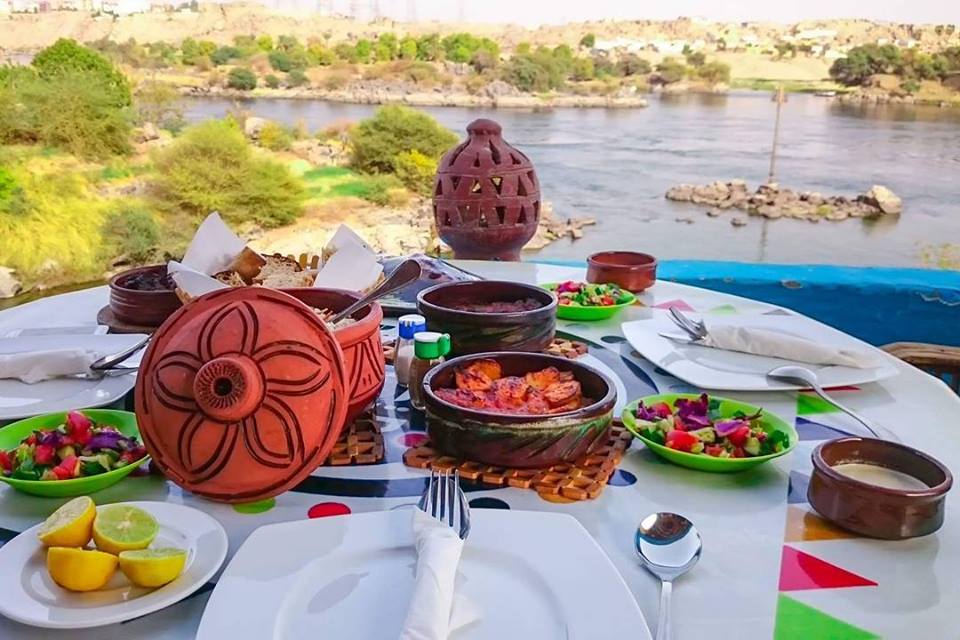
But Sharm has quietly built a food scene of its own that rarely gets credit in the "package holiday" conversation: Red Sea seafood grilled the same day it's caught, Bedouin-style slow-cooked lamb from desert camps, Egyptian staples like koshari and ful medames available a short taxi ride from any resort, and an increasingly serious specialty coffee and shisha café culture around Naama Bay and Il Mercato. Add in sunset felucca sails, desert stargazing trips with genuinely dark, light-pollution-free skies over the Sinai, and quad-biking through canyon systems that look like they belong on Mars, and the "what do we do after the beach" question answers itself for a full week without repeating.
Family Holidays: A Closer Look
If you're booking with children, the calculation shifts slightly but the conclusion doesn't. Sharm's Nabq Bay and Sharks Bay resorts increasingly compete directly with Antalya's family hotel belt on the things parents actually care about — shallow, gently sloping entry points for toddlers, multiple pools with slides, kids' clubs with English-speaking staff, and all-inclusive food that caters to picky eaters as well as adults. What Sharm adds on top is a built-in "wow" factor most parents don't expect: watching your own child put on a mask for the first time and see a genuine coral reef, full of parrotfish and clownfish, five metres from a sun lounger, is a different order of memory than another week by a heated pool. It's also, frankly, an easier sell to a bored teenager than a week of sunbeds — quad biking, submarine tours, and glass-bottom boat trips over reef systems give restless kids something to actually talk about when they get home.
Booking Smart: What to Actually Look For
If this comparison has convinced you to look seriously at Egypt for your next trip, here's what to prioritise when you're comparing Sharm El Sheikh holiday packages or hunting for the best all-inclusive Red Sea deals:
- Book shoulder months for the sharpest value. October–November and March–April combine near-guaranteed sunshine, comfortably warm (not scorching) daytime temperatures, and typically the strongest all-inclusive pricing of the year, since these months sit just outside Europe's peak school-holiday windows.
- Prioritise a hotel with a natural house reef over one with only a pool and artificial lagoon — it's the single biggest value multiplier on a Red Sea trip and it costs nothing extra once you've picked the right property.
- Check flight routing before you book. Direct flights from major European hubs to Sharm El Sheikh International Airport have expanded significantly as arrival numbers have climbed, but budget carriers sometimes route through a connection — worth the extra five minutes to check before you commit.
- Set a price alert rather than booking on the first search. Red Sea package pricing, like most package holiday markets, fluctuates week to week; travellers who compare across at least two to three booking platforms consistently report better deals than those who book on the first result.
- Add one paid excursion, not five. A single well-chosen trip — Ras Mohammed snorkelling, a Thistlegorm dive if you're certified, or a desert Bedouin evening — will outperform a scattergun itinerary of five rushed half-day tours.
Frequently Asked Questions About Sharm El Sheikh (and How It Compares to Antalya)
Is Sharm El Sheikh better than Antalya for a winter holiday? Based on the climate data, yes — decisively. Sharm El Sheikh's January highs run roughly 5°C warmer than Antalya's, with a fraction of the rainfall and roughly double the sunshine hours. If "winter sun holiday" is meant literally, Sharm delivers it; Antalya, for four to five months of the year, largely doesn't.
Is it safe to travel to Sharm El Sheikh right now? Sharm El Sheikh operates as a well-established international resort city with a dedicated, secured tourism zone, an international airport handling direct flights from across Europe, and roughly three-quarters of Egypt's total tourist arrivals concentrated in exactly this Red Sea resort belt. As with any international trip, check your home country's current travel advisory before booking, since guidance can change.
Do I need to be a certified diver to enjoy the Red Sea in Sharm El Sheikh? No. Many hotels sit on natural house reefs you can snorkel directly from the beach, no boat required, and the biodiversity is rich enough — over a thousand documented fish species region-wide — that even a first-time snorkeller will see more marine life in a single session than most Mediterranean beach destinations offer in a week.
How much cheaper is Sharm El Sheikh than Antalya for an all-inclusive package? It varies by season and operator, but the structural advantage is real: Sharm's peak-value season (winter) is Antalya's dead season, so travellers chasing genuine sun in December, January, or February typically find far stronger all-inclusive deals in Egypt than in a Turkish resort that's technically "off-season" and short on both weather and atmosphere.
What's the best time of year to visit Sharm El Sheikh? Nearly any month works, which is itself the selling point. October to April brings the most comfortable daytime temperatures for sightseeing and desert excursions alongside warm, calm diving conditions. June through September is hotter (highs in the mid-to-high 30s°C) but still a strong beach-and-reef combination for heat-loving travellers.
Is Ras Mohammed National Park worth the extra excursion cost? Marine researchers and dive publications consistently rank it among the finest reef systems in the world, not just in Egypt. If you do one paid excursion on a Sharm trip, this is the one worth prioritising over a generic boat party.
How does flight time compare between the two? Antalya generally has a shorter average flight time from central and northern Europe, often by an hour or more, thanks to its established short-haul network. Sharm El Sheikh's flight network has expanded significantly as arrivals have grown, with direct routes now running from most major European hubs, narrowing that gap considerably.
Is Sharm El Sheikh good for families, or mainly for divers? Both. Family resorts in Sharm are built around calm, shallow lagoon-style bays ideal for children's first snorkelling experience, on-site kids' clubs, and flat, walkable promenades — while divers and snorkellers can head out to deeper reef sites the same afternoon. It's rare to find a destination that serves total beginners and serious divers this well at once.
Which is cheaper for flights: Sharm El Sheikh or Antalya? Antalya typically has the edge on raw flight cost and duration from many European departure points, thanks to its dense short-haul network. However, once you factor in the length of usable holiday season, on-the-ground spending power, and included resort extras, Sharm El Sheikh frequently works out better value overall — especially for winter travel, when Antalya flights may be cheap but the destination itself has little sunshine to offer.
Can beginners try scuba diving in Sharm El Sheikh without certification? Yes. Most dive centres in Sharm offer supervised "Discover Scuba" style introductory dives for complete beginners, typically a shallow, closely guided single dive with a certified instructor, no prior experience required. It's one of the most accessible ways to try diving for the first time anywhere in the world, given the calm, warm, clear conditions.
Does Sharm El Sheikh get too hot in summer? Summer (June–September) is genuinely hot, with daytime highs regularly in the mid-to-high 30s°C and occasionally touching 40°C. Travellers who prefer more moderate heat should lean toward the October–April window, which still delivers reliably warm, sunny, dry conditions without the peak-summer intensity.
Is the nightlife better in Sharm El Sheikh or Antalya? Antalya, particularly around areas like Konyaaltı and the wider party-resort belt, generally offers a louder, more club-and-bar-driven nightlife scene aimed at a younger crowd. Sharm's evening scene is more relaxed — beach bars, shisha lounges, and restaurant terraces along Naama Bay — better suited to couples, families, and travellers who want a calmer evening after a day of diving rather than a big night out.
The Bottom Line
If you're weighing Sharm El Sheikh vs Antalya for your next booking, here's the honest version, from someone who spent six straight years choosing wrong: Antalya is a genuinely good summer destination with excellent ruins and a shorter flight. Sharm El Sheikh is a genuinely great year-round destination, with warmer winters, drier skies, more sunshine hours in every single month of the calendar, and a sea that scientific surveys rank among the most biodiverse on the planet — over 1,264 documented fish species and hundreds of coral species, versus a tired, overfished stretch of Mediterranean.
Egypt's own tourism numbers back up what travellers are increasingly discovering for themselves: close to 19 million visitors in 2025, growth rates north of 20 percent, and three in four of those visitors choosing the Red Sea coast over anywhere else in the country. That's not an accident and it's not marketing copy. It's what happens when word gets out that a destination simply delivers more — more sun, more sea life, more value, more of the holiday you actually paid for.
I haven't booked Antalya since. My next flight is already set for Sharm El Sheikh, and this time I'm bringing the good underwater camera.
Sources referenced: UK Met Office and WeatherAPI historical climate averages for Sharm El Sheikh and Antalya; Springer Nature (Fishes of the Red Sea and Gulf of Aqaba, 2020); peer-reviewed reef biodiversity field surveys published via PubMed Central; Egyptian Central Bank tourism revenue data via Trading Economics; Associated Press and Reuters-sourced Egyptian Ministry of Tourism and Antiquities reporting; UN Tourism regional arrivals data.

 Ukrainian